
血战钢锯岭
加拿大宣布9月8日起对美国商品征收报复性关税_我的网站

A |
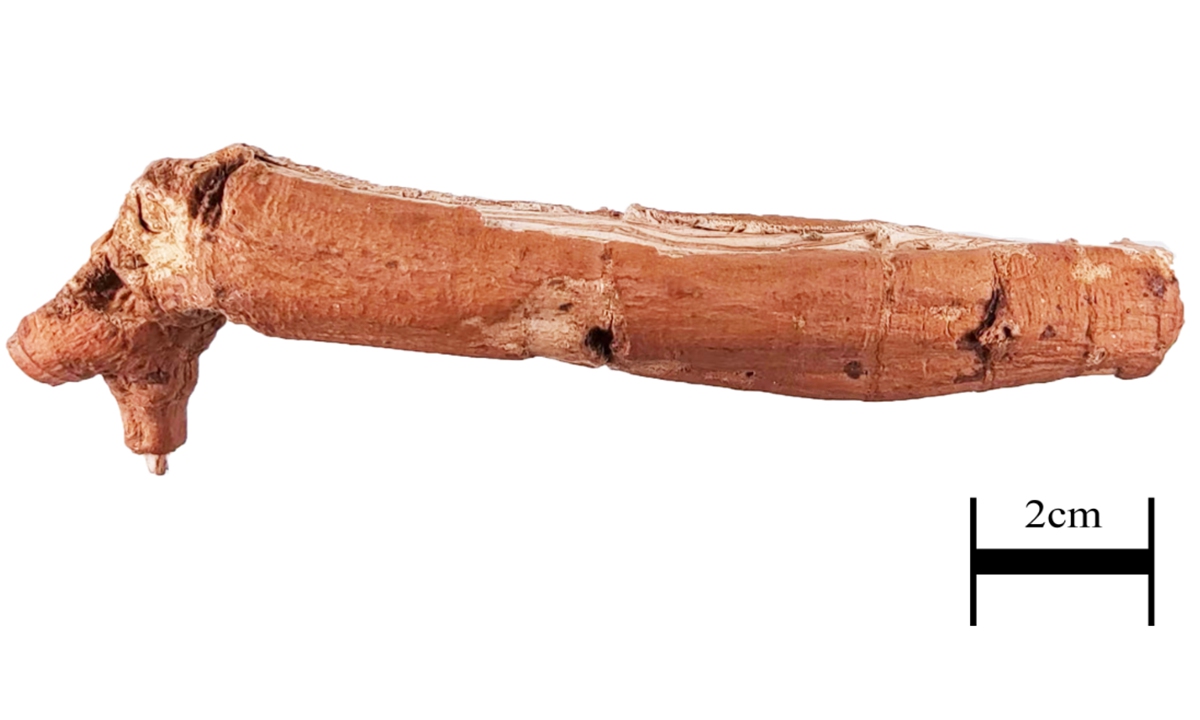
A Chinese research team has identified a new potential target to develop antidepressant drug from Qingyangshen, or Root of Auricledleaf Swallowwort, a traditional ethnic medicinal plant long used in Southwest China's Yunnan Province, according to Kunming University of Science and Technology, Science and Technology Daily reported Sunday.
The team, led by professors Xu Tianrui and Xiang Cheng from the university's School of Life Science and Technology, found that Qingyangshen glycosides, the plant's core active compound, can alleviate depression-related behaviors by simultaneously suppressing inflammation, reducing oxidative damage and stabilizing neurotransmitters in the brain.
The findings were published in the international journal Phytomedicine.
Depression has become a widespread mental health disorder globally, while existing clinical drugs fail to provide effective treatment for more than 30 percent of patients, according to the researchers. Previous studies have established a strong link between chronic inflammation and depression, but existing anti-inflammatory drugs have limited targeting capabilities, underscoring the need for new therapeutic targets and lead compounds.
Qingyangshen, a plant of the Cynanchum genus in the Apocynaceae family, has long been used as a traditional medicine by ethnic groups including the Naxi, Yi and Bai peoples in Yunnan, mainly for treating neurological conditions such as epilepsy and neurasthenia.
The researchers systematically examined the pharmacological effects of Qingyangshen extract and its core active compound, Qingyangshen glycosides. Tests using mouse, zebrafish and fruit fly models repeatedly showed that the compound significantly improved depression-related behaviors induced by inflammation, according to the report.
To identify the compound's target, the team developed a dual-discrimination model for four subtypes of prostaglandin E2 receptors and combined it with AI-powered machine learning. The researchers screened hundreds of G protein-coupled receptors and identified the prostaglandin E2 subtype 4 receptor as the direct target of Qingyangshen glycosides.
Multiple molecular experiments confirmed that the compound binds directly to the receptor and acts as an inhibitory ligand. Further experiments involving animals with the receptor knocked out in the hippocampus showed that the antidepressant effects of Qingyangshen glycosides disappeared completely when the receptor was absent, providing the first in-vivo evidence that the receptor is essential for the compound's therapeutic effects.
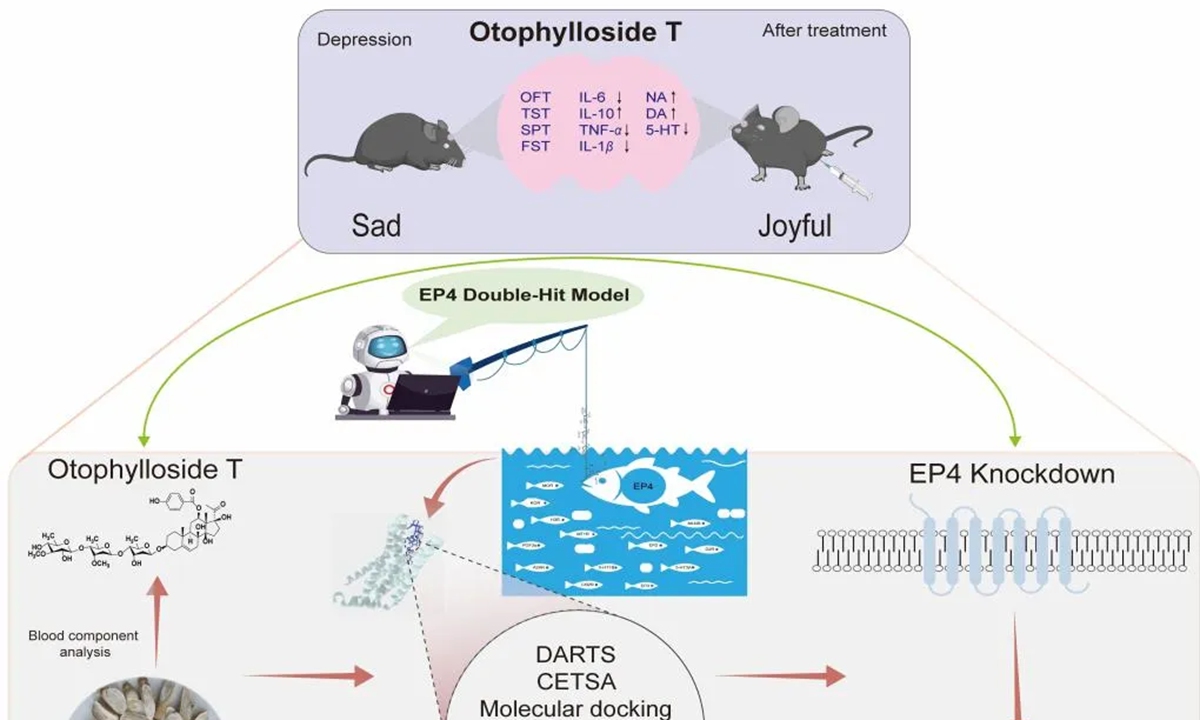
The study establishes the prostaglandin E2 subtype 4 receptor as a potential new target for antidepressant drug development and points to a new approach to treating depression through inflammatory pathways. It also identifies Qingyangshen glycosides as a potential lead compound for developing highly targeted anti-inflammatory antidepressants, creating a research chain from ethnic medicinal plants and active compounds to drug targets and new drug development.
Global Times
。 当地时间8月22日,加拿大总理卡尼表示,从9月8日起,加拿大将对来自美国的多个行业的进口商品征收关税,以报复美国新关税。 卡尼表示,这些报复性关税将涉及钢铁、乳制品、家电、农业设备、纸浆和造纸以及电子产品等行业,还将包括目前受到232条款和338条款关税影响的产品。 卡尼称,“我们不能接受他们提出的条件,也不会满足他们的要求”,为了保护加拿大工人、农民、家庭和企业,加拿大将对美国的新关税采取对等措施。
 (文章来源:央视新闻)。
Current article:http://0nxzfx.shangfochengcongshuaizhuang.buzz/news/20260826_63367.html
Published on:12:30:59
我的网站相关内容
 “沙德尔”预计将于28日凌晨到下午在浙江象山到福建福鼎一带沿海登陆,对上海影响“风大于雨”
 台风“梅花”逼近 南京上空乌云密布
 United in Heart|How did the century-old Mongolian and Tibetan school become the birthplace of multiple 'firsts'?
 中国男篮拉练热身不敌美国NCAA球队
 “体彩 + 潮玩手办”,解锁潮流休闲购彩空间
 Traditional Values & Military Glory: Things to Know as Russia Celebrates National Flag Day
我的网站最新内容
- ·特朗普的波音飞机在佛罗里达机场滑行时与停放的飞机相撞,特朗普情况不明
- ·Ex-Oregon prison nurse convicted of sexual assault gets 30 years
- ·抖音宣布上线 300 余部上美影动画作品,《大闹天宫》《哪吒闹海》《宝莲灯》等
- ·英特尔确认部分13代CPU产品搭载 VPU,14 代 Meteor Lake全面上线_Raptor_P-Cores
- ·全球市场:美股三大指数涨跌不一 存储、光通信板块下挫 国际金价延续涨势
- ·科创板股票可以跑量化策略吗?qmt、ptrade量化终端均可适配!
- ·B'desh & India complement, not compete in garment sector export: BGMEA
- ·GTA6 泄露事件迫使 Stop Killing Games 运动与黑客宣言撇清关系
- ·京通铁路怀柔北至隆化段换梁工程将于8月28日全面启动
- ·Overreaching for attention brings only humiliation, Chinese Embassy in Japan says on Taiwan's 'status downgrade' complaint
- ·Reserve Bank Efforts to Attract Foreign Exchange Will Only Fend Off Rupee's Fall Temporarily: Expert
- ·先生たちは幸せ?「誇りはあるのに、人には勧めない…」教員の約6割が抱える“矛盾”が生まれるワケ
- ·外媒炮轰“FIFA想把世界杯送给阿根廷”,C罗点赞
- ·16条举措落地让办税缴费更便利
- ·广东福彩双色球2800万元赠票活动 8月2日开启
- ·[통영소식]시 체육회, 인재육성기금 2000만원 기탁 등
我的网站热点内容
- ·기모바지 샀는데 여름바지 배송···“유튜브 광고 해외쇼핑몰 주의하세요”
- ·‘Some even suspect a listening device in a shaomai dumpling’: Chinese Embassy in Panama mocks US smears against Chinese tech firms
- ·来宜昌去哪吃 峡江风味鱼火锅探访指引
- ·工党的“甄嬛传”何时上演?11月或可揭晓
- ·抚顺市实现参加城乡居民基本养老保险的55-59周岁重度残疾人补助全覆盖
- ·马卡:即便穆里尼奥到来,卢宁也无法改变他是库尔图瓦替补的局面
- ·天禾股份:2026年4月至6月公司计提资产减值准备4358.24万元
- ·Unmanned SpaceX Dragon Cargo Mission Splashes Down Off Florida Coast - NASA
- ·义顺惊险一幕 男子从组屋高楼摔落
- ·Esports Nations Cup 延期至 2027 年 11 月
- ·湖南通报5起招标投标领域腐败问题典型案例
- ·iPad 10和iPad Pro首发订单准备发货 3599元起
- ·中国人民银行 市场监管总局公告〔2026〕第19号
- ·这个问题,“不是‘把谁送进去坐牢’就能解决的”
- ·天后郑秀文54岁生日 与老公许志安低调逛街买奶茶
- ·这个奥克兰日长周末,来自澳大利亚的飓风将影响北岛的天气